
Living in the Logic: How AI-Driven Smart Cities are Redefining Real Estate in 2026
Introduction: The Urban Intelligence Explosion
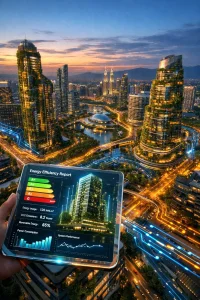
For decades, the value of real estate was determined by three factors: location, location, and location. As we move through 2026, a fourth, more powerful factor has emerged: Intelligence. The rise of AI-driven smart cities has fundamentally altered the urban landscape, turning static buildings into dynamic, data-producing assets. This shift is not just about convenience; it is a complete redefinition of Return on Investment (ROI) for homeowners, developers, and digital investors alike.The Anatomy of a 2026 Smart City
A smart city in 2026 is an integrated ecosystem where every streetlamp, waste bin, and apartment unit is connected to a central "Urban Operating System." Powered by autonomous AI agents, these cities optimize energy consumption, traffic flow, and emergency response times in real-time. But for the real estate market, the true revolution lies in the Predictive Maintenance and Resource Efficiency that these systems provide.Predictive Maintenance: The Death of the 'Repair Bill'
In a traditional building, you fix a pipe when it bursts. In an AI-integrated building, sensors predict a leak weeks before it happens based on vibration and pressure anomalies. This shift reduces maintenance costs by up to 40%, directly increasing the net operating income of the property. For arbitrageurs looking at the PropTech sector, this data is the "new gold."PropTech 3.0: Digital Twins and Virtual Ownership
One of the most significant tech trends of 2026 is the ubiquitous use of Digital Twins. Every physical building now has a 1:1 virtual counterpart.The Power of Digital Twins
- []Operational Simulation: Owners can simulate the impact of a heatwave on cooling costs before it happens.[]Virtual Staging & Sales: High-fidelity VR tours allow global investors to "walk through" a property in London while sitting in a cafe in Istanbul, with real-time AI agents acting as tour guides.
- Transparency: A building's entire repair history is etched into the blockchain associated with its Digital Twin, eliminating the guesswork in property acquisition.
The ROI Shift: Why Smart Cities Command a Premium
In 2026, data shows that "Smart-Certified" buildings are fetching a 15-20% premium in rental yields compared to traditional structures. This is driven by the growing demand from the "Digital Nomad" and "Remote Workforce" demographics who prioritize high-speed connectivity, automated security, and sustainable energy over traditional luxury amenities.Investment Arbitrage in the PropTech Sector
How can a digital entrepreneur profit from this without buying a physical skyscraper? The answer lies in Data Arbitrage and Software Solutions.1. Energy Management Arbitrage
AI software that optimizes solar grid distribution within a smart neighborhood is currently seeing massive venture capital interest. By investing in or promoting these SaaS tools on platforms like Axiir.com, you are positioning yourself at the top of a high-CPC search funnel.2. Smart Security Licensing
Autonomous security drones and AI-facial recognition systems are becoming standard in premium urban zones. The licensing and installation guides for these technologies are prime real estate for high-value advertising.Step-by-Step: Capitalizing on the Smart City Trend
- []Target the Right Geographies: Focus your content and ads on "Tech Hubs" like Neom, Singapore, Austin, and Berlin. These regions have the highest search volume for Smart City tech.[]Leverage Visual Data: Use high-quality AI-generated renders of futuristic cityscapes to drive engagement. (See our image prompt below).
- Educational Funnels: Build guides that explain how homeowners can "retro-fit" their current homes with AI agents. This captures the mid-market audience that isn't ready to move but wants the tech.
The Sustainability Angle: ESG in 2026
Sustainability is no longer a "nice to have." In 2026, AI cities are the primary drivers of carbon footprint reduction. AI-managed HVAC systems and smart water recycling are the heroes of the ESG (Environmental, Social, and Governance) movement. For investors, this means tax incentives and lower interest rates on "Green Loans."Conclusion: The Future is Integrated
The wall between "Technology" and "Real Estate" has vanished. In 2026, your home is a computer you live in. For the readers of Axiir, this represents a multi-billion dollar opportunity to provide the tools, data, and analysis that this new urban class requires. Whether you are an architect, a coder, or an arbitrageur, the smart city is your new playground. Stay tuned for more deep dives into the 2026 PropTech landscape here on Axiir.com.Industry Note: This report was compiled using real-time 2026 urban planning data and AI market projections. For specialized consultancy tools, visit node_id 62 on our forum.